
Search

March 07, 2019
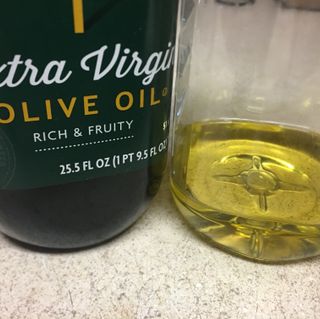
Grains and olive oil for a Mediterranean Dietcopyright American Heart Association
File

March 07, 2019
EPI | Lifestyle 2019 Scientific Sessions logoEpidemiology and Prevention | Lifestyle Cardiometabolic Healthcopyright American Heart Association
File

March 07, 2019
EPI | Lifestyle 2019 Scientific Sessions logoEpidemiology and Prevention | Lifestyle Cardiometabolic Healthcopyright American Heart Association
File

March 07, 2019
Yo-yo dieting may increase womens heart disease risk
Page
Study Highlights: Women who have lost at least 10 pounds, only to regain the weight within a year, are more likely to have a poor score on the American Heart Association’s - Life’s Simple 7, a measure of how well people control important heart disease risk factors. The more episodes of yo-yo dieting women report, the worse they score on Life’s Simple 7. In addition to achieving a healthy weight, maintaining a consistent body weight may be important for lowering heart disease risk. Embargoed until 3 p.m. CT/ 4 p.m. ET, Thursday, March 7, 2019 (NewMediaWire) - March 07, 2019 - HOUSTON - Yo-yo dieting may make it harder for women to control a variety of heart disease risk factors, according to preliminary research presented at the American Heart Association’s Epidemiology and Prevention | Lifestyle and Cardiometabolic Health Scientific Sessions 2019, a premier global exchange of the latest advances in population-based cardiovascular science for researchers and clinicians. “Achieving a healthy weight is generally recommended as heart healthy but maintaining weight loss is difficult and fluctuations in weight may make it harder to achieve ideal cardiovascular health,” said Brooke Aggarwal, Ed.D., M.S., senior author of the study and assistant professor of medical sciences at Columbia University Vagelos College of Physicians and Surgeons in New York. Investigators studied 485 women (average age 37 years, 61 percent racial/ethnic minorities, average body mass index 26, in the overweight range) participating in the American Heart Association’s Go Red for Women Strategically Focused Research Network at Columbia University in New York City. Women reported how many times (other than during pregnancies) they had lost at least 10 pounds, only to regain the weight within a year. They were assessed on American Heart Association’s - Life’s Simple 7, a measure of how well people control important heart disease risk factors (including body mass index, cholesterol, blood pressure, blood sugar, smoking, physical activity and diet). Most of the women (73 percent) reported at least one episode of yo-yo weight loss, with a range of zero to 20 episodes. Researchers found that women with one or more episodes of yo-yo weight loss were: 82 percent less likely to have an optimal body mass index (between 18.5 and 25, neither underweight or overweight for their height); and 51 percent less likely to be rated as moderate, and 65 percent less likely to be rated as optimal overall on Life’s Simple 7. The more episodes of weight cycling women reported, the poorer they scored on Life’s Simple 7, according to the researchers. The detrimental impact of weight-cycling on the overall Life’s Simple 7 score was most striking in women who had never been pregnant. “The women without a pregnancy history were likely younger and might be those who started weight-cycling at an earlier age. We need to identify critical periods for the effect of weight fluctuation on heart disease risk over the life course to find out whether it is worse when women start on a dieting roller-coaster at an early age,” said Aggarwal. The study is limited in not differentiating unintentional from intentional weight loss, and in being based on self-reported data and measures taken at a single time. Aggarwal stressed that the team cannot currently tease apart whether yo-yo dieting has adverse effects on Life’s Simple 7 factors or rather that those who don’t adhere to guidance on Life’s Simple 7 have a harder time maintaining low weight and end up yo-yo dieting more frequently. The study’s results in women may not be generalizable to men. “We hope to extend the study five to ten years to confirm these results and look at long-term effects,” Aggarwal said. “However, there has been prior research that showed similar results in men, with those who weight-cycled having twice the risk of cardiovascular death in middle age.” Co-authors are: Stephanie S. Byun, M.S.; Natalie A. Bello, M.D., M.P.H.; Ming Liao, M.S.; and Nour Makarem, Ph.D., M.S. Author disclosures are on the abstract. The American ...
March 07, 2019
Social support and a purpose in life may help preserve cognitive abilities with age in Hispanics/Latinos
Page
Study Highlights: Higher social support and a sense of purpose in life are associated with higher cognitive functioning in middle-aged and older Hispanics/Latinos. Loneliness has a negative relationship with cognitive function. Strengthening social resources might improve the health of Hispanics/Latinos as they age, perhaps lowering the risk of dementia. Embargoed until 3 p.m. CT/ 4 p.m., Thursday, March 7, 2019 (NewMediaWire) - March 07, 2019 - HOUSTON - Higher social support and having a sense of purpose in life are each associated with higher cognitive functioning in middle-aged and older Hispanics/Latinos, while loneliness has a detrimental effect on cognition, according to preliminary research presented at the American Heart Association’s Epidemiology and Prevention | Lifestyle and Cardiometabolic Health Scientific Sessions 2019, a premier global exchange of the latest advances in population-based cardiovascular science for researchers and clinicians. Previous studies have shown that psychological resources (such as optimism) and stressors (such as loneliness) are associated with cognitive functioning in non-Hispanic blacks and whites, but less is known about the role of these factors in Hispanics/Latinos. “Given the exponential increase in the Hispanic/Latino aging population, we need to consider tailored approaches to improve health. In this study, we are trying to identify key psychosocial resources in this population which could be used to improve their health as they get older,” said Mayra L. Estrella, Ph.D., M.P.H., lead author of the study and a research assistant professor at the Institute for Minority Health Research at the University of Illinois at Chicago. Participants included 1,572 women and 1,200 men between 45 and 74 years of age (average 56 years) who are part of the Sociocultural Ancillary Study of the Hispanic Community Health Study/Study of Latinos, a multi-center research project aimed at identifying factors that play a protective or harmful role in the health of Hispanics. Each participant reported on a variety of psychosocial factors, and they were tested on various cognitive skills and overall cognitive functioning. The researchers found: Higher scores on ethnic identity, life engagement and social support were associated with higher cognitive functioning; Higher scores on loneliness and familism (the extent to which the needs and interests of the family are more important that the individual’s needs) were associated with lower cognitive functioning. Higher perceived ethnic discrimination, which has been associated with lower cognitive functioning in studies of African Americans, was not associated with cognitive function in this group. “Life engagement – having a sense of purpose in life and engaging in activities that are personally valued – as well as social support from family and friends, were associated with better cognitive functioning, regardless of people’s age, sex, income, education, symptoms of depression or heart disease risk factors. Tapping into these psychosocial resources while minimizing stressors may provide effective strategies for improving cognitive function with age,” Estrella said. The researchers were surprised to find that familism, an important component of Hispanic/Latino culture which is usually seen as a positive personal resource, was associated with lower cognitive functioning. “Our results suggest that putting family interests ahead of your own may be a psychosocial stressor among middle-aged and older Hispanics and Latinos. One potential reason is that families with limited social and economic resources may places stressful demands on individuals, such as being a caretaker or helping economically,” said Estrella. While the current study did not focus on disease states such as Alzheimer’s disease and other dementias, finding potentially modifiable ways to improve cognitive function with age may help reduce the high burden of dementia among older Hispanics/Latinos living in the United States, according to the researchers. The investigators are conducting a ...
March 07, 2019
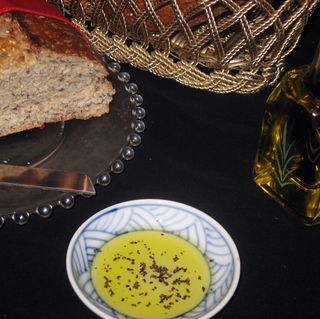
Eating olive oil once a week may be associated with making blood less likely to clot in obese people
Page
Study Highlight: Eating olive oil more frequently among healthy obese adults was associated with less platelet activity in the blood. Platelets are blood cell fragments that stick together to form clots. Embargoed until 3 p.m. CT/4 p.m. ET, Thursday., March 7, 2019 (NewMediaWire) - March 07, 2019 - HOUSTON - In a group of healthy, but obese adults, eating olive oil at least once a week was associated with less platelet activity in the blood, which may reduce the tendency of blood to clot and block blood flow, according to preliminary research presented at the American Heart Association’s Epidemiology and Prevention | Lifestyle and Cardiometabolic Health Scientific Sessions 2019, a premier global exchange of the latest advances in population-based cardiovascular science for researchers and clinicians. Platelets are blood cell fragments that stick together and form clumps and clots when they are activated. They contribute to the buildup of artery-clogging plaque, known as atherosclerosis, the condition which underlies most heart attacks and strokes, according to lead study author Sean P. Heffron, M.D., M.S., M.Sc., assistant professor at NYU School of Medicine and the NYU Center for the Prevention of Cardiovascular Disease in New York, New York. Using food frequency surveys, researchers determined how often 63 obese, nonsmoking, non-diabetic study participants ate olive oil. The participants’ average age was 32.2 years and their average body mass index (BMI) was 44.1. Obesity is defined as having a body mass index – a measure of body weight – over 30. Researchers found that those who ate olive oil at least once a week had lower platelet activation than participants whose ate it oil less often, and that the lowest levels of platelet aggregation were observed among those who ate olive oil more frequently. “People who are obese are at increased risk of having a heart attack, stroke or other cardiovascular event, even if they don’t have diabetes or other obesity-associated conditions. Our study suggests that choosing to eat olive oil may have the potential to help modify that risk, potentially lowering an obese person’s threat of having a heart attack or stroke,” Heffron said. “To our knowledge, this is the first study to assess the effects of dietary composition, olive oil specifically, on platelet function in obese patients,” said co-author Ruina Zhang, B.S., an NYU medical student. Some limitations of the study are that it relied on questionnaires completed by the participants; it measured how often they ate olive oil, but not how much olive oil they ate; and because it was observational the study could not prove that eating olive oil will reduce platelet activation in obese adults. Co-authors are: Ruina Zhang, A.B.; Manish Parikh, M.D., M.S.; Christine J. Ren-Fielding, M.D.; Sally M. Vanegas, Ph.D.; Melanie R. Jay, M.D., M.S.; Karry Calderon, A.B.; Edward A. Fisher, M.D., Ph.D., M.P.H.; and Jeffrey S. Berger, M.D., M.S. Author disclosures are on the abstract. The National Institutes of Health funded the study. Additional Resources: Multimedia including AHA volunteer expert, Linda Van Horn, PhD, RDN, FAHA, offers perspective (via audio/photo). Download and transcript available on the right side of the release link https://newsroom.heart.org/news/eating-olive-oil-once-a-week-may-be-associated-with-making-blood-less-likely-to-clot-in-obese-people?preview=e28fb9b9b48136de11a0336284e6c5ac Spanish release Managing Your Weight Mediterranean diet with virgin olive oil may be recipe for ‘good’ cholesterol For more news from AHA EPI Lifestyle Conference 2019, follow us on @HeartNewsTwitter #EPILifestyle19. Statements and conclusions of study authors that are presented at American Heart Association scientific meetings are solely those of the study authors and do not necessarily reflect association policy or position. The association makes no representation or warranty as to their accuracy or reliability. The association receives funding primarily from individuals; foundations and corporations (including pharmaceutical, device ...
March 07, 2019
Triad Pro Innovators is a One of a Kind Power Storage Developer Whose Unique eCell is Changing Power Storage Worldwide
Page
Fountain Valley, CA, March 07, 2019 (NewMediaWire) -- Triad Pro Innovators, Inc. (OTC Pink; TPII): Triad Pro is proud to announce a new breakthrough in its eCell energy storage technology. Triad Pro’s new power supply design, which just passed its final development milestone, can now provide access of up to 90% of the stored energy in its eCell, as opposed to common battery storage systems, which can only access 30-35% of stored energy. The Triad Pro eCell uses static dynamic storage elements, as opposed to the liquids used in a chemical battery. In off-grid scenarios and applications energy storage using traditional battery systems has many shortfalls: 1) they take too long to charge; 2) have limited variability at discharge; 3) require maintenance; 4) need to be replaced often due to limited charge/discharge cycles; 5) suffer from drastically reduced performance in extreme temperatures; 6) are routinely overbuilt to compensate for these weaknesses, or are not used at all. The newly developed Triad Pro power supply provides our storage system with tremendous operational flexibility. Using our propriety hardware and software solution, our eCell can be configured to store energy at a rate limited only by the network providing it, and then release that energy in a regulated way based upon the application, which allows for flexibility unknown in current chemical battery-based storage systems.For additional information about Triad Pro Innovators visit the website at: triadproinc.com Forward-looking Statements: This release contains “forward-looking statements” within the meaning of the safe harbor provisions of the Private Securities Litigation Reform Act of 1995. Forward-looking statements, which contain words such as “expect”, “believe” or “plan”, by their nature address matters that are, to different degrees, uncertain. The information in this release is provided only as of the date of this release, and we undertake no obligation to update or revise publicly any forward-looking statements, whether as a result of new information, future events or otherwise, after the date on which the statements are made or to reflect the occurrence of unanticipated events, except as required by law.Murray Goldenberg 3108902209 m.gol@verizon.net

March 07, 2019
Cavitation Technologies Receives Two Purchase Orders for Nano Reactor System in Mexico
Page
Chatsworth, CA - (NewMediaWire) - March 07, 2019 - Cavitation Technologies, Inc. (OTCQB: CVAT) (BERLIN: WTC) is pleased to announce that it received 2 new purchase orders from Desmet Ballestra Group, a strategic partner and licensee of Cavitation Technologies, Inc.’s vegetable oil refining technology since 2010.The Nano Reactor® systems will be installed for use in a vegetable oil refinery in Mexico at both ~200 and 400 metric tonnes per day (MTPD). The Company anticipates receiving $200,000 in the aggregate from this order and expects to record the revenue in the third quarter of Fiscal 2019.Igor Gorodnitsky, President of CTi, said, “We are delighted to receive not one, but two more purchase orders from our strategic partner, Desmet Ballestra. This will be the 16th and 17th installation in North and South America combined and the 3rd and 4th in Mexico.”About CTiFounded in 2007, the company designs and manufactures innovative flow-through devices and systems, as well as develops processing technologies for use in edible oil refining, renewable fuel production, water treatment, and alcoholic beverage enhancement. The company's patented Nano Reactor® systems and various technologies have over 30 patents issued and filed both domestically and abroad. http://www.ctinanotech.com/Follow us on Twitter for real time updates: https://twitter.com/CavitationTech Like us on Facebook to receive live feeds updates: https://www.facebook.com/ctinanotech Check us out on LinkedIn: https://www.linkedin.com/company/cavitation-technologiesAbout Desmet Ballestra GroupThe Desmet Ballestra Group provides engineering and supply of plants and equipment for the following industries worldwide:Oils and Fats and Animal FeedDetergents, Surfactants and related ChemicalsOleochemical and BiodieselDesmet Ballestra's R&D Team is composed of professionals specialized in Oils and Fats, oleochemicals and chemical processes, using the most comprehensive set of technological resources and equipment. Controlled by Financière DSBG, a holding company based in Paris, France, the Desmet Ballestra Group is present in all major market areas of the world through its integrated business units located in Northern and Central America (USA, Mexico), South America (Argentina, Brazil, Colombia), Asia & Far East (PR China, Singapore, Malaysia), India and Europe (Belgium, Turkey, Russia, Spain). http://www.desmetballestra.com/Forward Looking StatementThis release contains forward-looking statements within the meaning of the Private Securities Litigation Reform Act of 1995. In some cases forward-looking statements can be identified by terminology such as "may," "should," "potential," "continue," "expects," "anticipates," "intends," "plans," "believes," "estimates," and similar expressions, and include statements regarding the anticipated installation and the timing of the installation, our intent to continue to focus on research and development, marketing and sales of our unique technology, our belief that our company is positioned for accelerated growth and the expected efforts to be made to enhance our shareholder's value. These forward-looking statements are based largely on the Company's expectations and are subject to a number of risks and uncertainties, certain of which are beyond the Company's control. Actual results could differ materially from these forward looking statements as a result of a variety of factors including, among others, the state of the economy, the competitive environment and our ability to perform the installation as anticipated and other factors described in our most recent Form 10-K and our other filings with the SEC, including subsequent periodic reports on Forms 10-Q and 8-K. In light of these risks and uncertainties there can be no assurances that the forward looking statements contained in this press release will in fact transpire or prove to be accurate. The information in this release is provided only as of the date of this release, and we undertake no obligation to update any forward-looking statements contained in this release on ...